

SECTION HEADER | HVHD News and Updates | HVHD Events | Recipe Highlight
National Suicide Prevention Month: Together We Can Prevent Suicide
September is National Suicide Prevention Month. Every year thousands of mental health organizations and individuals across the U.S. raise awareness of suicide prevention, with the message, together we can prevent suicide.
Across the U.S., in 2024 suicide was responsible for 48,824 deaths. In the same year an estimated 14.3 million adults seriously thought about suicide, 4.6 million planned a suicide attempt, and 2.2 million attempted suicide. In Connecticut there are 10 deaths for every 100,000 people, slightly lower than the national average of 13 to 14 per 100,000. In 2025, 353 people in Connecticut died by suicide. Of those people 264 were male, more than doubling the reported 89 for females. This gender trend exists throughout the United States as well. With men dying by suicide at roughly four times the rate of women. Conversely, women report higher rates of suicidal thoughts and attempt suicide two to four times more frequently than men. This pattern is known as the gender paradox of suicide.

CT.gov Annual Suicide Statistics
After looking the statistics, we can ask the question, what can be done to help prevent suicide? 988 and 211 are crisis hotlines available 24/7 for anyone who needs them. Whether you’re facing mental health struggles, emotional distress, alcohol or drug use concerns, or just need someone to talk to, both numbers have caring counselors ready to aid you. There are also many trainings that can be taken to help you spot someone who may need aid and further understand someone who is in a mental crisis.
QPR or Question, Persuade, Refer is one such training that has been proven to save lives and reduce suicidal behaviors. Just as people trained in CPR and the Heimlich Maneuver help save thousands of lives each year, people trained in QPR learn how to recognize the warning signs of a suicide crisis and how to question, persuade, and refer someone to help.
Suicide doesn’t have just one cause, and it can’t be prevented with just one solution. Preventing suicide requires understanding and addressing the factors that increase risk for suicide and suicidal behaviors, helping those at higher risk, and supporting survivors of suicide loss.
We can work together to ensure no lives are lost to suicide. Everyone benefits when they feel understood and supported and have access to care during challenges.
Prevention is everyone’s responsibility. Families, schools, workplaces, faith communities, health systems, and individuals all have a role to play. Small acts of connection, such as a check-in, a shared resource, a moment of genuine attention, are how communities take care of each other.
TOPIC RESOURCES
https://www.cdc.gov/suicide/prevention/index.html
https://qprinstitute.com/about-qpr
HVHD Service Spotlights

Emergency Preparedness
When Everyday Life Gets Disrupted: Small Steps That Can Make a Big Difference
Emergencies do not always look like the disasters we see on the news. A prolonged power outage, severe storm, flooded roadway, unexpected evacuation, or disruption in communication can quickly affect our daily routines.
This September, as we recognize National Preparedness Month, consider taking a different approach to emergency preparedness: prepare for the disruptions that could make everyday life more difficult.
Ask yourself:
Could I access important information if my phone or computer was unavailable?
- Keep important phone numbers, emergency contacts, and medical information written down in a safe place.
Would I have access to medications if I could not get to the pharmacy?
- Talk with your healthcare provider or pharmacist about maintaining an appropriate supply of necessary medications.
Do I know what is happening during an emergency?
- Make sure you know how to receive emergency alerts and have more than one way to access important information if the power or internet goes out.
Would someone know if I needed help?
- Check in with neighbors, family members, and friends—especially older adults and individuals who may need additional assistance during an emergency. Building strong community connections is an important part of preparedness.
Emergency preparedness is not about expecting the worst. It is about taking practical steps today that can make unexpected situations easier to manage tomorrow.
This month, choose one area of your daily life and ask: “What would I do if this were suddenly unavailable?” The answer may help you identify your next step toward being better prepared.

Stay Updated During an Emergency
Fall weather can bring heavy rain, strong winds, flooding, early frost, and occasional severe storms. Changing weather conditions can lead to power outages, hazardous travel, fallen trees, and other emergencies. Staying informed and prepared can help keep you and your family safe throughout the season. Use the guide above to sign up for local weather and emergency alerts so you can receive timely updates when severe weather or other emergencies are expected in your community.
Stay Informed, Not Alarmed
Public Health Updates:

FDA Food Recalls
| With news of foodborne outbreaks and multiple recalls issued by the FDA, knowing what to worry about—and what not to—can feel overwhelming. There have been an average of anywhere between 400 and 800 food recalls per year since 2013. With 483 recalls reported so far in 2026, the number of recalls is currently within the typical annual range. However, the size and scope of these recalls are also important to consider. In the first half of this year alone, 37.18 million pounds of food were recalled. This represents a 2,432% increase over the same period last year and the highest amount of recalled food reported in the past 10 years. The number of recalls alone is not necessarily a reliable measure of food safety. We don’t know what we don’t know. It is possible that foodborne illnesses are increasing, but cases may not always be detected, investigated, or linked to a specific food product—meaning a recall may never occur. The organization of the FDA’s food recall list below can help provide some clarity about which recalls may warrant closer attention and which may be less concerning. (Foodborne Illness Recall List compiled by Your Local Epidemiologist.) Red = check your fridge; yellow = check, but less risky because there are no illnesses yet; footnote = FYI: recalls, because they are one-offs. 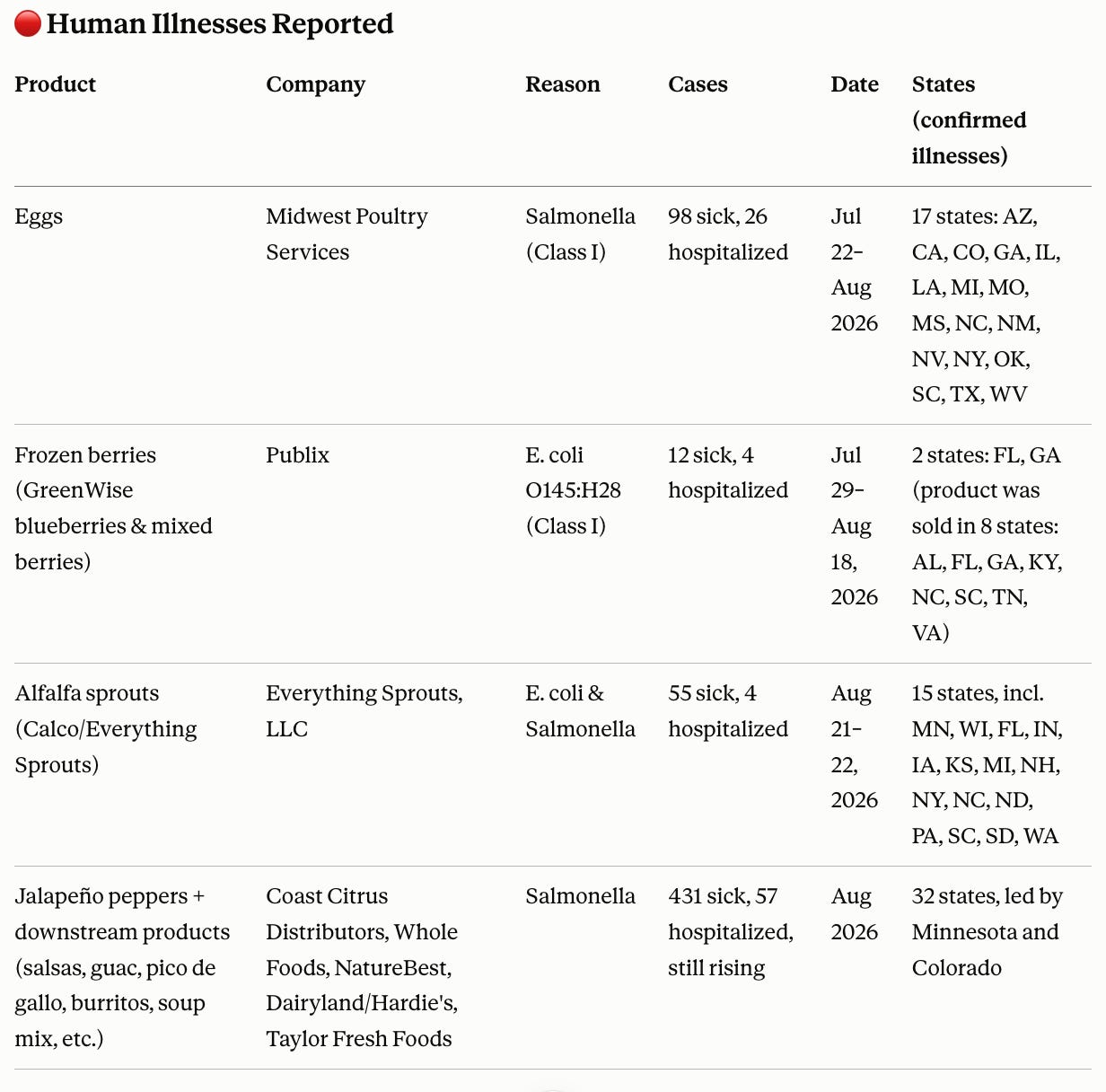 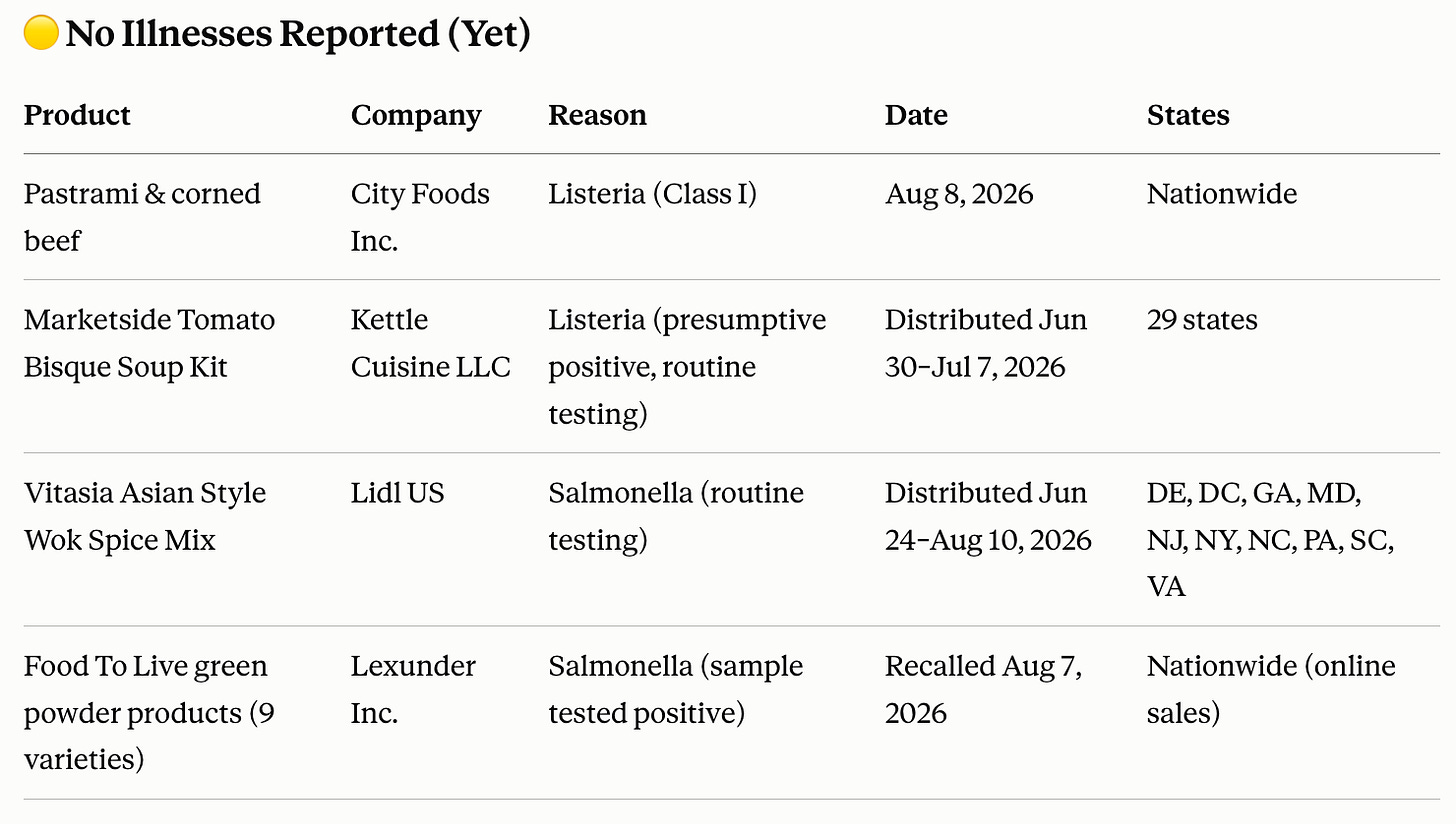 While food recalls can be overwhelming, staying up to date and using safe food handling practices can help you keep you and your family healthy. Safe food handling practices follow four main steps: Clean, Separate, Cook, and Chill, as outlined by the Centers for Disease Control and Prevention. Clean -Wash hands: Scrub your hands with soap and warm water for at least 20 seconds before, during, and after food preparation. -Sanitize surfaces: Wash counters, cutting boards, and utensils with hot, soapy water after each use. -Rinse produce: Wash fresh fruits and vegetables under running tap water before eating or cutting. Separate -Avoid cross-contamination: Keep raw meat, poultry, seafood, and eggs away from ready-to-eat foods in your shopping cart, fridge, and prep area. -Use separate cutting boards: Designate one board for raw meats and another for fresh produce and bread. Cook -Check temperatures: Use a clean food thermometer to ensure meats reach safe internal temperatures—such as 145°F for whole cuts of beef or pork, 160°F for ground meats, and 165°F for all poultry. -Heat thoroughly: Reheat leftovers and casseroles to a steaming 165°F. Chill -Refrigerate promptly: Put perishable foods, cooked meals, and leftovers in the fridge or freezer within 2 hours (or within 1 hour if the surrounding air is above 90°F). -Thaw safely: Defrost items inside the refrigerator, in cold water, or using the microwave, never on a room-temperature kitchen counter. -Explore complete safety guidelines provided by the Food Safety and Inspection Service. -Review official home storage rules from the U.S. Food and Drug Administration. -Learn prevention strategies from FoodSafety.gov. Resources: https://yourlocalepidemiologist.substack.com/ https://www.fda.gov/safety/recalls-market-withdrawals-safety-alerts https://www.cdc.gov/food-safety/prevention/index.html |

Environmental Health Spotlight:
Safer School Supplies
With school back in session, it is important to remember that art supplies can contain toxic ingredients that when used, or stored in a play area, can cause immediate and/or long-term health effects. Children are uniquely vulnerable; it is important to purchase and use supplies that are certified as non-toxic. Adult supervision is always recommended when young children are using any type of art supplies.
Lead, cadmium, asbestos, and organic solvents are sometimes used to enhance pigmentation, preserve art products, and to improve application. These toxic ingredients can trigger asthma, allergies, headaches, and nausea, especially if used in a poorly ventilated area.
Tips for Safer Arts & Crafts:
- Use only certified non-toxic art supplies. Refer to ACMI website here to find products certified with the Approved Product (AP) Seal
- Read labels and identify precautions.
- Keep workspaces ventilated with open screened windows and/or doors; or work outside.
- Do not allow children to eat or drink while using art and craft materials.
- Ensure children wear protective smocks and wash their hands thoroughly after using art and craft supplies.
- Wet mop, or vacuum with a high-efficiency HEPA filter to clean floors.
- Use a wet cloth to clean surfaces.
- Proper disposal of art materials
Safer Alternatives:
- Plant-based dyes (such as canned beets, cranberries, frozen blueberries, turmeric)
- Papier-mâché made from newspaper and library paste or white paste (flour/starch and water).
- Water-based glues, markers, and paints
HVHD Director of Health Monthly Discussion with Robinhood Radio

HVHD Events: September 2026

Join us for Our 2026 Fall Flu Clinics
Help keep our community healthy from the Flu by getting your annual vaccination!
Join us for one of our many free public clinics! Just bring an ID and insurance card; vaccines will be provided regardless of insurance status.
No appointment is needed, just let us know you’re coming!

CHT Events
| Are you interested in what you can do to help combat one of the biggest mental health issues of our time? Join HVHD’s Public Health Nurse for a free Narcan and QPR training in the Woodbury Public Library! We are running a in person training class on September 15th from 6pm-7:30pm. QPR stands for: Question. Persuade. Refer. This easy, three step mental health program can teach anyone how to help prevent suicide. If you are interested in learning how to better support your community, please join us for our free class. Naloxone (Narcan) is a life-saving medication intended to reverse the effects of an opioid overdose. It is a pre-filled nasal spray, so simple that anyone can administer it. To administer, all you need to do is follow 3 simple steps. Step 1: Make sure the person receiving Narcan is lying on their back. Step 2: Insert the medication into the nostril and press the button. Step 3: Call 911. Narcan can be used even if the person receiving it has not taken any substances, so it is best to be safe and use Narcan even on suspected overdoses. For free Narcan, please visit either of our HVHD offices. |
| Learn more |
HVHD Events: MONTH YEAR

Recipe Highlight: Warm Cinnamon-Raisin-Apples
Sizzling apples are bathed in a warm, thick, gooey sauce in this super simple recipe. Serve this delectable dessert on its own or topped with a heaping scoop of fat-free plain Greek yogurt.
Ingredients
Servings 4 Serving Size 1/2 Cup Time 10 Mins
Ingredients
- 1 tablespoon light or dark brown sugar
- 2 teaspoons cornstarch
- 1 teaspoon ground cinnamon
- 1/4 teaspoon ground nutmeg (freshly grated preferred)
- 1 cup 100% apple juice, divided use
- 2 teaspoons canola or corn oil
- 2 medium Braeburn, Rome Beauty, or Golden Delicious apples, peeled if desired, thinly sliced, and patted dry
- 2 tablespoons raisins (golden preferred)
- 1/4 cup dry-roasted chopped walnuts
Directions
- In a small bowl, stir together the brown sugar, cornstarch, cinnamon, and nutmeg. Stir in 1/3 cup apple juice. Set aside.
- Heat a large skillet or wok over high heat. Pour in the oil, swirling to coat the bottom. Cook the apples for 2 to 3 minutes, or until tender and lightly browned, stirring constantly.
- Stir in the raisins and the remaining 2/3 cup apple juice. Stir in the brown sugar mixture. Cook for 4 to 6 minutes, or until the sauce is thickened, stirring constantly. Just before serving, sprinkle with the walnuts.
——————————————————————————————————————
American Heart Association recipes are developed or reviewed by nutrition experts and meet specific, science-based dietary guidelines and recipe criteria for a healthy dietary pattern.
Some recipes may be suitable for people who are managing diabetes, high blood pressure, heart disease and/or other conditions or seeking low-sodium, low-fat, low-sugar, low-cholesterol or low-calories recipes. However, this site and its services do not constitute medical advice, diagnosis or treatment. Always talk to your health care provider for diagnosis and treatment, including your specific dietary needs. If you have or suspect that you have a medical problem or condition, please contact a qualified health care provider.
Copyright is owned or held by the American Association, Inc. (AHA), except for recipes certified by the Heart-Check recipe certification program or otherwise indicated. All rights are reserved. Permission is granted, at no cost and without need for further request, to link to or share AHA-own recipes provided that no text, ingredients or directions are altered; no substitutions are made; and proper attribution is made to the American Heart Association. See full terms of use.


